Showing posts with label Project planning. Show all posts

Monday, 2 January 2023

2023 Plans - Part 2: Craft Details

EDIT @03:45: Minor spanner in the works in the shape of the first Charm Patterns Patreon release for 2023, which I now ALSO want to make. If it's a sew-along, well... there goes my initial plans!

New Year goals 2023

"New Year goals 2023" by Marco Verch is licensed under CC-BY-2.0.

This post is specifically for my crafting plans for 2023. As outlined in the previous post, I intend to limit myself to not more than one project per month, and probably no more than 8 for the whole year to allow for both time off and for projects to take longer than planned. In some ways this is a 2-3 year project plan as my aim for 2023 is to gain core outfits plus some specific items, and to improve these outfits over time... I may add some longer term plans at the bottom, or not, depends how long it takes me to type this up!

These are outline plans - nothing about inspirations or fine details. I will list a broad project title, the item(s) involved, patterns to be used, and rough fabric information (owned, fibre, weave). 

Layout

Project title:

Description: Outfit item(s) + Good/Better/Best

Purpose:

Pattern: Company, # or name, owned/not

Fabric: Fibre, weave, owned/not

Status: Unstarted, In Progress, Complete

Links: Link to a full project post if one exists

1. Regency

Project title: Regency dress

Description: Regency gown with back fastening and long sleeves

Purpose: Early 19th century historical costume

Pattern: Laughing Moon #138 (owned)

Fabric: Cotton - have a printed cotton, may buy a swiss dot though

Status: In progress: Pattern pieces cut out mock-up for pattern size completed

Links:

2. Mid-19thC

Project title: Gaskell dress

Description: 1850s/1860s crinoline dress with pagoda sleeves

Purpose: Mid 19th century historical costume

Pattern: Laughing Moon #111 (owned), View B

Fabric: Wool (owned)

Status: In progress - continuation and improvement

Links:

3. Late-19th C

Project title: Fan Skirt #2

Description: Remake of earlier fan skirt project, with lessons learned

Purpose: Late 19th century historical costume

Pattern: Black Snail #0414 (owned)

Fabric: Purple/black 100% wool (owned)

Status: In progress: Fabric bought

Links:

4. House dress

Project title: 1949 House dress

Description: Wrap house dress from 1949, Ruler resized pattern

Purpose: Work and around the house. Easy-on clothes

Pattern: Enbonpoint Vintage #94 - Mable (owned)

Fabric: Cheap cotton or polycotton

Status: Planned

Links:

5. Pinafore dress

Project title: Julia pinafore dress

Description: Pinafore dress pattern from c.1950s, Ruler resized pattern

Purpose: Work and around the house. Easy-on clothes

Pattern: Enbonpoint Vintage #134 - Julia (owned)

Fabric: Cotton or polycotton

Status: Planned

Links:

6. Rita blouse

Project title: Rita blouse

Description: 1950s style blouse

Purpose: To go with fox skirt

Pattern: Charm Patterns - Rita (owned)

Fabric: Cotton/Polycotton

Status: In progress: Mock-up for pattern size completed, pattern pinned out but not cut

Links:

7. Bullet bra

Project title: Bullet bra

Description: 1960s bullet bra, ruler pattern

Purpose: Underwear for 1950s style clothes

Pattern: Mrs Depew #527B (owned)

Fabric: TBC

Status: Unstarted

Links:

8. 1950s Petticoat-skirt

Project title: 1950s Petticoat

Description: 1950s petticoat or skirt, ruler pattern

Purpose: Underwear for daily wear with 1950s style skirts/dresses (less floofy)

Pattern: Mrs Depew #7309 (owned)

Fabric: TBC

Status: Unstarted

Links:

Other proposed plans

Ideas and projects which may happen in addition to those above, in place of those above, or not until next year or even later!

9. Sarafan

Project title: Sarafan

Description: 19thC or folkloric sarafan, shirt, and apron

Purpose: Cosplay - Vasilisa the Wise and Baba Yaga

Pattern: Folkwear #128 - Russian Settler Dress (owned)

Fabric: Cotton

Status: Planned

Links:

10. Gambit dress

Project title: Gambit dress

Description: Pinafore dress in the style of The Gambit

Purpose: Daily wear

Pattern: Mood - Gambit (free/owned)

Fabric: TBC

Status: Planned

Links:

11. 1940s dungarees

Project title: Dungarees

Description: 1940s/Rosie the Riveter -style dungarees

Purpose: Daily wear - work and home

Pattern: Charm Patterns - Lucille (owned)

Fabric: TBC

Status: Unstarted

Links:

12. High waist shorts

Project title: Button Shorts

Description: 1930s-style button-front decorated shorts

Purpose: Summer-wear

Pattern: Charm Patterns - Ginger (owned)

Fabric: TBC

Status: Unstarted

Links:

13. Edwardian blouse

Project title: Edwardian blouse

Description: Early 1900s to 1910s blouse

Purpose: Historical costume for late 19th and early 20th century. To go with existing fan skirt(s)

Pattern: Black Snail #0816 (owned)

Fabric: Cotton lawn (owned)

Status: Mock-up for size completed

Links:

14. Wrapper dress

Project title: 1840s Wrapper

Description: Dress from 1840s-1860s for at-home wear

Purpose: Costuming and at-home

Pattern: Laughing Moon #120 (unowned)

Fabric: TBC

Status: Unstarted

Links:

15. 1890s shirtwaist

Project title: Shirtwaist

Description: Shirtwaist or shirt pattern from c1890

Purpose: Late 19thC costuming to wear with fan skirt(s)

Pattern: Black Snail #0314 (unowned)

Fabric: Cottons

Status: Unstarted

Links:

16. 1890s cape

Project title: Short cape

Description: Short cape from c1890

Purpose: Late 19thC costuming to wear as warmth with fan skirt(s)

Pattern: Truly Victorian #590 (unowned)

Fabric: Wool or similar heavy material

Status: Unstarted

Links:

17. Ten gore princess skirt

Project title: Princess skirt

Description: Corsolet waisted skirt from 1906

Purpose: Historical costuming 

Pattern: Truly Victorian #TVE23 (unowned)

Fabric: Wool

Status: Unstarted

Links:

18. 1917 skirt

Project title: 1917 Evelyn skirt

Description: Large pocketed 19-teens skirt

Purpose: Daily wear and Historical costuming 

Pattern: Wearing History - Evelyn (unowned)

Fabric: Cotton or wool

Status: Unstarted

Links:

19. Smocked aesthetic shirtwaist

Project title: Amsterdam Smokwerk blouse

Description: Pattern inspired by the turn-of-the-century Smockwork blouse/shirtwaist in Amsterdam 

Purpose: Daily wear and Historical costuming 

Pattern: Clockwork Faerie - 1890s Aesthetic shirtwaist (unowned)

Fabric: Cotton

Status: Unstarted

Links:

18. 1890s Apron

Project title: 1890s Apron

Description: An apron to go with 1890s outfit(s)

Purpose: Daily wear and Historical costuming 

Pattern: Undecided (unowned)

Fabric: Cotton

Status: Unplanned

Links:

Saturday, 12 June 2021

Costume from Russian Folk Tales, Part 1


Costume from Russian Folk Tales...

This project was begun at the end of 2020 as a rough idea triggered by the Foundations Revealed competition for February 2021. My executive dysfunction wasn't letting me anywhere near that, plus I found I would far rather do this "properly" than to an external timetable.

So, what is this project?

This project is part historical costume, part folk costume, and part cosplay. It's actually in two parts, with two characters being developed.

The Context

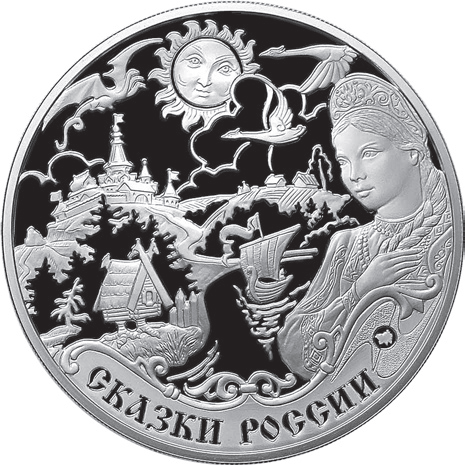
 I first fell in love with Russian folk tales, specifically the type called skazki, when I was an undergraduate. I chose to write my BA dissertation on the nature of the Russian Skazka, and I have never lost my love of folklore since then.

I am specifically focussing on the "skazka" in this project, but Russian has many types of folk tales. One of these days I should write up that, but the difference between the types is far too long for this post. The skazka, or "things said", is the type of folktale I focussed on in my dissertation, and which remain my favourite. The word is skazka in singular, and skazki for the plural.

Although some people like to translate the word as "fairy tale", that's inaccurate, since Russian folklore in general lacks "fairies" - those creatures are a tradition of different regions, like Ireland, Scotland, and France. However, they do broadly align with the fairy tale tradition - mostly or completely fictional traditional tales. In England, fairy tales traditionally start with the phrase "Once Upon a Time", and the skazka has a similar cognate phrase used to begin tales "Жили были" - literally "There lived, there was". 

My personal favourite tale is the Tale of Ivan Ivanovich, the Firebird, and the Grey Wolf (Сказка об Иване-царевиче, жар-птице и о сером волке). Russian folktales have other fantastic creatures in place of the Western European "fae", in addition to the aforementioned Firebird, there are magicians, like Koshchei the Deathless, named birds like Finist the Falcon. For more generic creatures, that reflect the risks of the Russian landscape, there are the Rusalki, spirits of the drowned who live in bodies of water, the domovoi, polevoi, and leshi - spirits of the home, field, and forest respectively. There are also personifications of things like the Midday Sun.

All across Europe many different folktales were collected in the 18th and 19th Centuries. The pre-eminent collector of Russian tales was a gentleman called Aleksandr Nikolaevich Afanase'ev, and where possible I'll be sticking to variants of the tales that he collected.

One important thing to note about folklore, and folktales in particular: these are from an oral literary tradition. The original tales were never intended to be written down in any country, but were passed on from one person to another over the years. Tales varied with each retelling and with each storyteller, so there is no one canonical version. This goes for tales like Cinderella and Snow White as well. In the study of folklore, a key figure is the Finn Antti Aarne, who wrote the original "Folklore Index" in 1910. This index lists so-called "motifs" which are found internationally in folklore, and which exist across cultures and traditions. In 1928, Aarne's Index was expanded by a US folklorist called Stith Thompson, with the work becoming known as the Aarne-Thompson Index. In 2004 it was updated again by the German Hans-Jörg Uther, expanding the descriptions and numbering, but also removing motifs attributed to a single ethnic group. Russian folktales are a weaving of the many cultures and ethnicities that their polity came into contact with. 

The Characters & Their Tales 

There are a number of characters I would like to create costumes for, but here are my current plans:

Vasilisa (Василиса) 

There are a number of girls in Skazki called Vasilissa, most notably Vasilisa Premudraya - Vasilissa the Wise, and Vasilisa Prekrasnaia - Vasilissa the Beautiful. Her epithets can get mixed up in tellings, and she can also vary from a peasant girl to a princess depending on the tale. The tale I have chosen to focus on is often seen as a "Russian Cinderella" tale, although some of the similarities may be later additions. I'm focussing on the core of the tale.

Vasilissa is a peasant girl, daughter of a travelling merchant and his wife. His wife dies, but before she does she gives her daughter a doll, with instructions to give it food and drink if she was in need. An unspecified amount of time later, her father remarries to a widow with two daughters, both older than Vasilissa. At this point it is the standard cruel stepmother and wicked stepsister motif, but the story deviates again when the father leaves on a journey and his new wife moves the new family to a house beside the forest. There are various shenanigans, which lead to all the candles and fires being out in the house, and Vasilissa being sent into the woods to get a light from Baba Yaga. More on Baba Yaga later, but it's important to note here that she is a chaotic witch character who, like many other witches-in-the-woods, is predisposed to eating children. When Vasilisa arrives, Baba Yaga gives her semi-impossible tasks to perform in return for the fire. With the aid and protection of her doll, Vasilisa manages to complete all her tasks within the time limits and (long story short) is ejected homewards with a burning skull-lantern. It transpires that in her absence no one had been able to sustain a light in the house. even when brought in from another place. When she arrives home, the skull causes the whole house to burn down, with the evil step family included, after which Vasilisa buries the skull according to the instructions to ensure no further harm would come from it. What happens to Vasilisa after that varies from telling to telling, with some having her just living "happily ever after", others leaving her apprenticed to a local cloth-maker, and some extending that to having her skill noticed by the Tsar himself who marries her.

The key elements here, to me are:
  • Peasant costume
  • The doll
  • The skull

Snegurochka (Снегурчка)

Sneh-GUR-och-ka

Snegurochka is an odd character in that she is still evolving. Originally there were two contrasting stories which both had a main character called Snegurochka. 

In the first tale, she was created by an elderly infertile couple from snow and ice. She grows up a lovely girl, but when taking part in Spring festivities which included jumping over a bonfire, she turns into smoke and vanishes. This tale speaks to me as one half of an infertile couple, seeking to conceive through "other means".

In the second tale, Snegurochka is the natural daughter of the Spring and Grandfather Frost. She falls for a shepherd, but cannot feel true love because she has a frozen heart. When her mother grants her the ability to love, her heart warms with love for her shepherd but she then instantly melts.

In more recent times, Snegurochka has gained the tradition of being the granddaughter of Grandfather Frost, and is frequently portrayed in art and festivities around the New Year and Christmas celebrations. 

Rusalka (Русалка)

The Rusalka (plural Rusalki) is sn Eastern Slavic female watery spirit, who varies between being a fertility symbol and an evil entity depending on the tale and / or the teller. According to renowned folklorist Vladimir Propp, the association of her with evil was a 19th century change. Ignore any descriptions which describe them as "mermaids" - they're not associated with the sea or salt water, and fish tails are not widely featured in their mythos.

The evil rusalka is often portrayed as the spirit of a young woman who had died either in or proximate to a body of water, and who then haunted that location. Some stories suggest (or even state) that the women died by drowning themselves, others that they were murdered by lovers, and yet others that these were accidental deaths. Jilted lovers, abused spouses, and unmarried pregnant girls are among those who have supposedly become rusalki, as well as unbaptised children and girls who died before marriage. In some regions, that could also include women who died in childbirth, between birth and churching, and also those who got abortions. Basically any women who wasn't the perfect Maiden-Mother-Crone, one might say.Their raison d'etre is usually vengeance in one form or another - some are pacified by being avenged, but others seek out young men to lure into the water with them where they will tickle them to death. Yes, tickle...

Visually rusalki are frequently described as "beautiful" (of course), but not always. The further North, the more likely the tradition is to make the Rusalka older and uglier. Where the body is described in detail they are often given big breasts, which are "big-big, so scary"! They usually have either long ed or green hair, however some tales do give them light brown or blonde hair instead. The significant point is that the hair is long and loose, even unkempt. They are almost invariably naked, and sometimes have notably long arms. Where they converge with the Western mermaid mythos is in their attitudes - they have long hair which they like to comb out when out of the water, and they like to sit on rocks or docks with their feet in the water. However they do have feet. Some tales suggest that they use fishbones to make headwear of some type - possibly akin to the unmarried woman's kokoshnik. Although they are usually portrayed as solitary, there are tales where they exist in groups. Almost all descriptions give them a love of music, singing and dancing.

Traditionally, the Rusalka would come out of the water on "Kupala night" to join in the more general festivities. Coincidentally, this is the same festival that causes the death of the first Snegurochka. In early June there was "Rusalnaia Nedelya", or Rusalka Week, when the rusalki would leave their home bodies of water to sit and swing in the branches of birch or willow trees at night. During this week it was considered dangerous to swim in the water. The week would end with a ritual banishment (or burial) of the rusalki.

Her fertility connections came from a belief that she would take care of the fields, forests and waters near to her "home", being something of a genus loci or spirit of a locality. In this way, the rusalka is part of the mythos with other Russian spirits-of-place like the leshi and polevoi. It is notable, however, that the rusalka is not consistently believed to actually inhabit her body of water - some tales give their residences as being the tops of tall trees in the forest. Other tales suggest that rusalki migrate annually from the water to the trees during Rusalka Week. In some regions, it was believed that if your local rusalka was having fun, then there would be a good harvest.

Escaping from a Rusalka was impossible once in the water, but if you met one walking in a forest by accident, you could escape by throwing them a scarf, a sleeve from your dress, or another piece of cloth or clothing. One legend type has it that rusalki steal cloth, clothing, and food from women who fall asleep without praying. According to Zelening, the rusalka would also seek her lovers from amongst the men of these women who fell asleep before praying. If a young man was able to grab a rusalka and put a cross around he neck, then she would "submit" to him and live with him willingly until the next Rusalka Week.

Rusalki are liminal characters, existing between life and death, and there is almost undoubtable a connection between the Rusalka Week of the 19th and 20th centuries, and the earlier Rusalia festival in memory of the dead.  

My love of the rusalka myth comes from their duality. On the one hand they are vengeful beasts who lure young men and drown them, on the other they save young children from wild animals and save people from drowning. They want to hurt and cause harm to those who harmed them, and they are also cheerful girls who love to play. At once malicious and sly, and also joyful, humourous, and fun-loving. I like their liminality, but also the fact that you could interpret their state as a refusal to accept a strictly prescribed route in life - they weren't the maiden, the successful mother, or the doting grandmother. Life gave them lemons and they made lemonade - they took the hand they were dealt and rolled with it. I also like that they are all women when in groups, who love to sing, to dance, and to generally play around. 

Baba Yaga (Баба Яга)

Ba-ba-ya-GAH

Baba Yaga is the witch archetype in Russian folklore. Sometimes she's a solitary woman, and sometimes she's a trio. She's an ambiguous character, who sometimes helps the protagonist, sometimes hinders, and sometimes neither. She can be an old wise woman who grants important guidance, or a fearful child-eating monster to be escaped, all depending on the tale. Baba is a word signifying woman and/or grandmother across Slavic languages. The second element, "Yaga" is currently seen as cognate to words that can be translated as horror, anger, witch, fury, disease, pain, or worry. 

In Vasilisa's tale, above, her status is even more ambiguous. On the one hand she is clearly shown as desiring to eat Vasilisa, yet she also gives the heroine the vital thing she needs - fire/light. Some scholars have interpreted her role here as being a necessary intermediary between dependent childhood and independent adulthood - a repository of wisdom, only to be shared with those who are worth of it, and after they have passed through some right of passage event.

Baba Yaga is a very clearly described person, who is associated with a number of specific objects and traits. Her mode of transport is almost invariably a pestle and mortar, where she rides in the iron mortar, using the pestle as power, and has a broom behind her which sweeps away her trail. She lives in a small hut in the woods, which usually has chicken legs and may even walk around. Occasionally her hut is instead propped up on blini (pancakes). When she approaches, on reciting a rhyme her hut turns to face her and lets her enter. Like Western European witches, her home is surrounded by a fence but instead of being made of sweets, it's made of bones and topped with glowing human or horse skulls. Inside her hut is a stove, on which she sleeps, and she has a big nose - so big that in some tales it reaches the ceiling. Her nose is powerful, and in some tales she can smell the scent of the hero when hidden. One of her legs is bony - in fact one of her epithets is Bone Leg. Her teeth are described as being made of iron. She is always ugly and old, with grey hair and sagging breasts. Yet for all that she is not the beautiful protagonist, or the heroes prize, she remains a valuable person who demands the respect she deserves. Successful heroes and heroines are the ones who treat her, at least eventually, with respect and humility, and who endeavour to complete the tasks she sets them.

Her hut is interpreted as being a type of house-coffin used for the dead in the region in early times. These huts were small, just fitting a body, and were raised up on legs above the ground. The entry point to these huts was traditionally placed facing away from the living villagers. This reinforces the interpretation of the symbolic nature of Baba Yaga as a figure on the boundary between life and death.

Baba Yaga is usually alone, even when part of a trio each sister lives alone. As a mother in some legends, of the sorcerer Koshchei the Deathless, she is never given a mate. She does have magical associates, both human and animal. In Vasilisa's tale, she is associated with three knights - one red, one white, and one black - who symbolise the dawn, midday, and night. In The Geese-Swans, she is supported by the eponymous birds who initially snatch the baby brother, and then who chase the sister and brother as they escape home. However, in neither tale is she seen with the others, merely that they are associated with her.  

Firebird (Жар птица)

The Firebird is a magical beast, who can be a blessing or a harbinger of doom depending on her tale. In most tales the bird is precisely that - a magical bird which can be captured or stolen, and which can sometimes talk, but otherwise is just a bird. In her Land of the Firebird, Massie told another version of the Firebird tale whereby the bird was actually a young girl tragically transformed by the evil Koshchei, but I don't have a copy to hand to verify which tale that was from originally.

In many of the stories about the Firebird she is a quest goal for someone - usually the youngest Prince, and in one instance a royal archer. In almost all of these tales, the trigger for the quest is the finding of one of the Firebird's shed feathers, and triggers a covetous desire on the part of the monarch. In both the Firebird and Princess Vasilisa, and Ivan Ivanovich and the Grey Wolf, the quester must also retrieve the beautiful princess, called either Elena or Vasilisa the Beautiful.

The mythos of the Firebird has influenced artists in and around Russia for centuries. In particular, Stravinsky's ballet and traditional folk art. 

To Be Continued

Well, this is getting a bit long, so perhaps I'll pause here and continue in another post...

Saturday, 15 May 2021

2021 Plans Updated and Expanded

 So, I wrote a post earlier this year outlining my original crafting plans for 2021, which was made using the Historybounding Discord channel's prompts. I'm now updating my plan based on the following:

a) Reality - I now have a better grasp on what I am able to realistically complete in a given month

b) Using the British Guild challenges instead

c) Adding non-crafting plans (mostly reading)

So without further ado, here is my updated 2021 Plan

Crafting

Prompts (from this month onwards)

  • Mythology May
  • "Sumer is icumen in"
  • Just do it!
  • Academia and Allure
  • Spooks & Secrets
  • Out to Sea
  • No Buy
  • Winter Woolies

May 

Mythology, Legends, Folktales

I've always planned to make an outfit based on Russian folklore, so I'm still hoping to get at least part of that underway this month. It might turn out to be a much longer project, but I wanted to get a catalyst section completed in May. Currently I am hoping to make a version of a sarafan, based on dress from an unknown museum. I had thought it was in the Государственный исторический музей, as I have a copy of a page showing it in an exhibition held there, but since I can NOT find it anywhere in their collections, I have to assume it was a loan item. I'll share the inspiration image(s) I'm using on another post as I hope to write more on Russian folk costume later this month.

June 

Summer - theme or purpose

I have a vague plan to make an Edwardian or Late Victorian hat, to go with my walking skirt planned outfit. A nicely decorated hat could double as a summer hat. I may also consider a fan and a parasol as useful things for summer...

As Pride is still within the remit of June for the updated challenges, I may colour theme it with the Ace/Aego colours.

Other options I have considered:
1950s swimsuit or other beachwear
Summer pattern circle skirt (because I love circle skirts!) - with a petticoat to match if I make this
Edwardian blouse - nice and cool for summer, but also covered up, because sunburn

July 

Just do It!

I have no specific plans here yet, but honestly there are many aspects of sewing which I've not yet had the confidence to try, so there's lots of opportunities here.. This may be where I finally actually work on the Edwardian blouse! I may also use July to get a nice big chunk of my Regency underthings sorted.

August 

Academia and Allure

Well, I guess August is the time to let my inner librarian become my outer one! My plan for August is primarily to make an Edwardian (stroke Late Victorian) walking skirt from the pattern I bought last summer. I may line it in something fun though, especially if I can find a cute books related fabric print... 

This month may also be the one where I try out the American Duchess cloak pattern.

September 

Spooks and Secrets

I am not ashamed to state that I am a goth and that I love the gothy aesthetic as much now as I did as a student. I've not got any definite ideas here, but vague thoughts include

Bonnet trimming - can get quite autumnal and/or spooky without much difficulty
Cobweb themed circle skirt (and hopefully a top to match)

October 

Out to Sea - Nautical or Regency (thinking of Trafalgar Day)

I'd like to spend October working on a spencer, pelisse or redingote for my Regency 1818 project. The fashions for these sorts of coats were strongly influenced by military fashion. A waistcoat is also part of the borrowing of men's fashions for women, and would be a nice thing to make...

November

No Buy November. 

Whatever I make this month must not cost me anything if at all possible. I am personally choosing to make exceptions for items purchased at charity shops or otherwise second hand, as I feel Not Bought New still aligns with the ethos of No Buy.

I will NOT be applying this to my life in general in November, notably because November into early December has a LOT of family birthdays, plus spreading out buying helps a lot towards making Christmas affordable. In acknowledgement of this aspect, however, I will continue to make a conscious effort to make as many of my Christmas presents as possible. 

December

Winter Woolies

If not done earlier in the year, then both the AD Cape and Pelisse fit here beautifully. I may also focus on the "wool" aspect and try again to learn how to crochet.

I will also be using December to make presents, so that will be the "Winter" aspect...!

Reading

Reading is one of my longest persisting loves, and I have managed to completely lose my mojo over lockdown. I need to get it back! There is some flexibility in this list for adding new books that I buy, borrow, or which are selected for my book group. I hope to pay for the Hugo voting packet again this year, so I'll also be adding those books to the list. Here's my Short and Longer lists for 2021, where Short List is library books, books I've started reading, and a few others. The Longer List is for books I would like to get around to reading this year, and also books I want to read, but which are stored at the other end of the country from me... I also am resolving to ensure that I read at least 50% of my magazine that I have on subscription (because I accept that not every article is going to grab my interest each month). 

In "honour" of writing this, I am going to read at least one short story off my list before I go to sleep tonight! 

Short list

Started and need finishing:

Who Fears Death
The Island of Sodor
Cold Comfort Farm
The Fifth Season
No Longer a Gentleman
Regent's Park [history book]

Library books

Blood of Elves
Children of Blood and Bone
Cursor's Fury
Dreams of Gods and Monsters
Elsewhens
The Hundred Thousand Kingdoms
The Hunt
The Kingdom of Copper
A Peace Divided
Redemption's Blade

Short Stories

The Angel of Khan el-Khalili
Chicken Chicken Bang Bang
The Perseverance of Angela's Past Life
Head of a Snake, Tail of a Dragon
If at First You Don't Succeed, Try, Try Again
The House of Aunts
The Queen's Army (Lunar Chronicles)
Book of Souls (Prof Croft)

Long list (additional possibilities)

Hugo Leftovers

A Memory Called Empire
The City in the Middle of the Night
The Light Brigade
Middlegame

Presents (2020 Birthday and Christmas)

Prudence (re-read)
Imprudence
Competence
Reticence
Strange Brew
Of Wars, and Memories, and Starlight

Finally I have 5 or 6 books which were given to me in return for reviews. I need to do my genuine best to read them (or DNF) and write genuine reviews before the end of 2021. 

Saturday, 10 April 2021

New Brain Squirrel!

 So recently I've been thinking a lot more deeply about how I want to approach historical costuming for me. Both in the direction of historically adequate and inspired work for everyday, but also for more intentional costuming, e.g. for events.

So my first issue is physical. Me. I am not young, I am not princess-beautiful, I am not single, and I am not slim. I am (mostly) OK with myself - I don't mind my age, or my looks, and I'm not getting a divorce; yeah, I need to lose some weight, but even without the extra I will never be slim because my frame is naturally broad and solid. I am from working class and middle class stock, and it shows. And I am good with that. BUT I need to work with that, rather than pretend to be something I am not. 

To look at this from a historical perspective, in past centuries a woman of my background, marital status and appearance would have been heavily mocked for "aping her betters", or for pretending to be something she wasn't. High fashion is usually, then as now, directed at the young, the rich, and the fashionable. Most of the country just weren't that, and wee unlikely to have seriously desired it. Would living a life of luxury have been nice, of course, but you could daydream while washing the dishes, managing a home, and raising the children, because life as always carries on needing to be lived.

The upside of this, from my perspective, is that clothing that the average woman would have worn was more likely to be practical and usable in daily life. Ball gowns are pretty, but aren't really practical for wearing on a daily basis. 

All that said, even lower class women may have owned one or more nice dress. 

  • It may have been a wedding dress, much amended over time, and adjusted to accommodate new necklines or hemlines. 
  • It may have been bought from a clothes reseller - second hand markets have existed for a Very Long Time, and have always been a way in which men and women could potentially access to things otherwise out of their reach. 
  • It may also have been a gift. Gifts of old clothing from employers to servants, particularly in a domestic setting, were not uncommon. These clothes, while no longer high fashion enough for those who were being served, were absolutely acceptable for Sunday Best for those serving them, perhaps with a little adjustment. And if no longer usable as-is, the gifted clothing could happily be made over into something else more suitable to their needs (or indeed sold on via the above mentioned second-hand trade). The giving of clothing and/or fabric as gifts to vassals, to indicate favour, or indeed to curry it, has been used since at least the Elizabethan era, if not earlier[1]

So what does this mean for me, and what has my Squirrel Brain decided to do?

For me, it means I want to concentrate more on making clothing that my ancestors would have worn, rather than "Princess Pretty" clothing. That means middle to working class mostly, with a mixture of rural farming society, urban domestic servants and some northern factory mill workers. These were people who were more likely to be illiterate to functionally literate, than readers of magazines. If they did see fashion plates it would not have been because they sought them out, and more like when I look at the houses in Country Life - ultimately not something I ever expect to own anything even close to!

And as for my squirrel brain? Well that's decided on a new Project, which is superficially simple, but may prove to be Quite Long... Squirrel Brain would like me to find images of at least one working to middle class costume that I like, for each decade of the 19th Century, and possibly early 20th Century too. And then to make them up. Perhaps one working, and one middle class. This isn't to say I can't make the Pretties too - as above, women could still access nice clothes; plus I can make what I like for the fun of it! However, I probably will not count anything like this towards this project. 

The Plan

First step in this project will be gathering images. Initially photos to give the impression of a decade, and then picking specific looks to recreate. While I'm doing that, I will probably work on underwear for a while, as that will also be necessary for anything I make outside this little (hah!) project. After that, will be the long process of creating them...

To be helpful to myself, I'm not going to do this chronologically, but instead let my brain bounce around as it wills it. That has the advantage of while I want to get stuck into more complicated eras to source at the beginning of the 19th Century (i.e. before widespread photography, and when the average person wasn't getting their portrait painted), I can also do easy bits bringing in images I already have from the 1890s-1920s period. 

I may do years within a given decade for later periods where we have more surviving source material for me to use. Nevertheless, I want to stick to a minimum of one costume per decade, with more being a nice-to-have option.

I also am seeking to actively avoid uniforms and livery. The stereotypical working-class image of a 19th Century woman is of the domestic servant, but while I am interested in her clothes, what I want to recreate is what she wore when not a work. Basically, going beyond the stereotype of the black dress with the white apron over it. What did she wear on Sunday? What about after she married and left service (if she did)? Those are the outfits I'm seeking to find.

While I'm happy to look at extant examples of clothing, for this project I want to focus on images from the time. Images show you want was being worn, by whom (status/class), and how. I hope to only use museum examples to pad out the iconographic resources, rather than replace them, although I have no idea how successful that idea will be!

Is this all I'm going to be doing for the future? Oh no. Definitely not! I have other plans in the pipeline, and idling in the back of my head still, but this is something I want to do gradually over the next few years. In the long run, it may even be able to be a resource that others can use on middle to lower class fashions.

Citation

[1] One example would be the donation of a dress (or dresses) by Elizabeth I of England to the wife of a prominent Irish nobleman who she wished to have allied with her.

Saturday, 13 February 2021

2021 Craft Plans

 While I've completely missed January, and we are now well into February, I thought I'd share my rough plans for the first part of 2021 at least.

First note is to say that while my 1818 ensemble is still in the works, Plague and lockdowns are putting September 2021 strongly into doubt as a physical meeting for me. I'm now mentally putting it as September 2022 for Plague and Other reasons. It's both sad and good - sad because it would have been fun, and good because I have longer to plan it...

So, first things first is to say that I am broadly planning to follow the Historybounding Discord's challenge for the next few months.

  1. Finish It February
  2. Mod It and Mend It March
  3. Apparel Appreciation April
  4. Myth May
  5. Pride Month June
  6. Just Use Stash July
  7. Alterations August

February 

I will either get my Regency bonnet completed, or finish off a fox toy I started sewing last summer. Probably the latter due to the lack of days in February!

March

I have a LOT of things that need mending kicking around, so I'll find something for that! And then make a start on April. 

An alternative is to act on a Very old plan to convert some of the many Hello Fresh "freezer bags" we got some years back into one or more cushions.

April 

I'm not sure here. The guidance is to just mix and match eras, so maybe I may make up my Victorian walking skirt, but pair it with some existing 50s style tops I have.

May 

For this, I plan to put into action the research I did for the Foundations Revealed competition, that then had to be shelved due to health reasons. I plan to make a sarafan (and possibly the rest of the outfit) for Vasilissa the Wise and/or Snegurochka.

This is one month where I will need to start work well in advance of May, due to the need to purchase supplies.

June 

I, currently at least, have no idea how to "make it gay". Maybe I'll make something in the Ace colours? I am neither a rainbow nor a pink person, so the traditional Gay or Bi pride flags won't work for me...

Asexual Pride Flag - Black - Grey - White - Purple
Source: Wikipedia.

July 

I have stash, I can use those! Maybe using some of the buckram stash to make another hat?

August

Alterations could be a great thing, especially if we're able to travel by then and I can gather some of my old clothes from my parents...

Wednesday, 23 September 2020

Harvest Millinery

 I am part of the British Guild of Historical Costumers channel on Discord, which evolved out of the CoCoVid event this summer. They've proven to be fantastic bad influences and I love them all dearly! Our lovely Admin decided to run a Historical Harvest Hat Challenge.


So, the key parameters are:

  • Harvest, autumnal, or halloween themed
  • Hat or other object worn on the head (bonnets, hoods, tiaras, and so on are OK, for example)
  • Historically inspired or historically accurate

I have currently got a few ideas, so this is a rambling post where I try to put my thoughts together into something coherent enough to actually make... For the sake of my hands and reader's brains, wherever I type "hat" below, please view it as a general term equating to "headwear within the competition parameters". So with that said, here are my thoughts, inspiration, and personal parameters.

Endurability 

Yes, "endurability" is actually a real word.

My first thought was that I need whatever I make to have a life outside of this competition. The object made needs to endure beyond this one event. This is both a financial and an ethical consideration. Financial because it seems incredibly, pointlessly, wasteful to make a hat that I won't use otherwise. I don't currently wear any kind of headwear a lot because I am absent minded and lose things all too easily. 

Ethically, I am also uncomfortable with spending time, money and effort on something that is then going to be either pitched in a bin (think schoolkids' Harvest Festival Crowns) or otherwise sat on a shelf gathering dust. This is different from a financial consideration because it's not about whether I have the money, but on the morality of making such a disposable product. I am gently moving myself towards a more renewable and sustainable lifestyle, and one way in which I am consciously doing that is by trying to choose against Fast Fashion. To me, making a totally disposable challenge entry would be utterly contradictory to that!

Practicality

My only thing I wear on my head with any regularity is a sunhat when walking midsummer, because I prefer to neither burn nor get sunstroke! But, a sunhat wouldn't really fit within the parameters of the challenge, so I scrapped that idea from the get-go.

So what else would be practically useful? A medieval hood would be lovely, but I haven't been actively involved with a re-enactment group in over a decade. That means that a re-enactment ready piece of clothing would also be rather wasteful at present - if I start attending again, I can continue to wear my existing green hood, since I'm unlikely to have grown out of it!

What about non-hatlike headwear? I used to wear headbands a lot, but I don't think I've worn one since the 1990s. I stopped wearing them mostly because while I liked the simplicity of brush, band, go, most purchased bands pinch in painfully on my head, and bunch out higher up. I also wear glasses now, and I suspect that the pinching point on a headband would be pretty close to the pinchy point on my glasses when I've been stuck in telecons for hours (right where the ends of the arms will push in if you're stuck wearing over-ear cups for too long). So no, not doing a headband even if they can be pretty and would be fairly inexpensive to make - I'm fairly sure that I'd never actually wear it again!

Ideas

I've currently got a few ideas:

Mediaeval Hoodie

Thinking on medieval hoods set me on a separate thought chain: I spend a fair bit of time up in soggy Manchester. Which rains, a lot. I have two coats - one warm one without a hood, and one light one with a hood. The light one is good for summer squalls, but is quite old and so I'd be concerned about wearing it in sustained or heavier rain. The warm one is a gorgeous Hellbunny Millie one in teal. It keeps my body dry, but my head gets more than a little damp. I currently wear a hoodie under it when I know I'm likely to need a head covering, but that bulks it out and can make it a little uncomfortable, especially if I want to also wear a warm jumper or cardigan in the office or wherever. In other situations I have a scarf that I can fold to wear over my head, but of course that's not terribly waterproof, but is portable and unlike an umbrella, is unlikely to be accidentally put down and forgotten.

What about a mediaeval-style hood or hoodie that I can wear under my Millie coat to give a hood in the winter when I need it but without spoiling its line or making it uncomfortably bulky? It would need to be waterproof, or at least water resistant, but making it in wool would help with that. If it isn't needed to be historically accurate, I can choose a colour of wool that I just like regardless of modern dyes or social status considerations. I could also embroider it, and even alter the pattern to be more "inspired by" than a copy-of type thing. This would be a practical make that I would use, and also not too financially onerous because while 100% wool is expensive, I wouldn't need a hell of a lot for one hood. Even using pure linen, cotton, or even silk for a lining wouldn't be impossible because of the small scale of the item. I've also seen some pseudo-historical ones (SCA accurate, so plausible but possibly no direct evidence) with embroidery and even shaped dagging. That could bring the autumnal theme in beautifully! 

Historical costume - JA Festival

I could also make a Regency bonnet, which I will need to make/buy at some point for my Regency outfit (see my forthcoming post on outerwear). If I brought forward my headwear plans for the Jane Austen Festival, and also made the decorations autumnal themed, then perhaps that would work? I would need to consider colours more carefully as I don't have the dress fabric yet, and my original rough plan for a Regency bonnet involved covering it with the same fabric as used for the dress. Without the final fabric, I would have to be very careful not to have it accidentally clashing. This is even more of a risk because I want to use that very specific greenish-blue that is shown in the Ginsburg and DAR photos. Finding colours that fit with the theme AND which wouldn't clash with the hypothetical dress fabric will be quite difficult.

Historical costume - other eras

What about other eras? 

I could make a general Victorian era bonnet or cap and then build a costume around it later. That would stop the item being wasted but wouldn't stop it gathering dust for a year or more while I find time and a costume to go with it. I think that this would be a fun project, but probably not for this year...

I could maybe look at a late Victorian or Edwardian hat to go with my 1890s/Edwardian style ahistorical ensemble I should be starting soon. That would be appropriate to a specific costume, and I am already planning to make the skirt in either russet or brown, which would harmonise well. On the other hand, I wasn't planning this outfit as being strictly historical, and therefore wasn't really planning on having an appropriate hat to go with it at all.

Current Plans

Currently my plans are bobbling between three ideas.

  1. An embroidered and (ivy) leaf-dagged pseudo-medieval hood to wear either with my Millie coat, or a new one since my lovely Millie is a fair few years old and beginning to show it
  2. A simple Regency bonnet with autumnal decorations. Simple would reduce the chances of clashing with my final fabric choices, and I could even add trimmings later (e.g. bias ribbon bows) that tie it more closely to the dress colour.
  3. A late Victorian hat that just looks cool
The embroidered hood is a gorgeous idea, and I can see the practical uses for it. Downside is mostly a skill based issue - am I able to do the embroidery I envision. Without the embroidery I don't know if I like this idea as much.

The Regency bonnet is something that I have instructions for, and was planning to make, just not this year. Might be pricey, but it just re-jiggs my existing project plan not replaces it.

A late Victorian hat trimming project would potentially be cheap and simple, and I could maybe repurpose the result into a summer hat.

I shall continue thinking on this and then share my project plan once I have my ideas in place. Of course it's entirely plausible that I'm going to try making more than one of these because Why Not?? 

Friday, 18 September 2020

Getting sidetracked. And managing being sidetracked.

 While I don't have ADHD (to my knowledge!) my ASD symptoms overlap to some extent. One big area of dysfunction for me is what is known in my house as the "Oooh shinies" - or "squirrelling" or "butterflies"... Basically it's when I'm happily involved in one project or concept, and stumble across something else, and now need to research the hell out of it. 

I've recently noticed how it affect craft projects too. At first, it wasn't a major problem - researching cloth, colours (hello recent post on Clarence Blue!), or fabric weaves wasn't too far from my existing point of research. I've been stressing at work this week, which has triggered hypersomnia for me (not unusual), so I've been mostly a semi-zombie from mid afternoon for the last week or so. I spent yesterday evening vaguely moving crafty ideas around on Trello to create a list of a) what I own, and b) a plan for making it (whether that be 2 years hence or whatever). The trigger for that was that the other week Black Snail had a sale on some of their PDF patterns, so I bought a bunch, including two full sets of patterns to make for my husband (when I've never made men's clothes before, so guess I'm learning that!). 

I bought three intentional patterns, plus some others because they were on offer (foolish, but at least PDFs don't take up space or get damaged!):

  1. Spencer/Redingote

  2. Regency/1830s bonnet.

  3. Corset, petticoat and chemise pattern (1830s, but the corset still has the line for the 1818 dress, and this is a corded one which I was particularly interested in trying).

  4. Jacket, trousers, and waistcoat patterns for c1890s

  5. Jacket, trousers, and waistcoat patterns for c1830s

  6. Fan-skirt (1890s)

  7. Edwardian blouse

I also received my Laughing Moon dress pattern for the Regency dress. So, way forward is obvious, no? Here was my plan:

  1. Mock up corset and adjust for sizing - use medieval shift for underneath for fitting
    Adjust, rinse, repeat.
  2. Mock up dress with basic corseting for sizing
    Adjust etc.
  3. Make a petticoat using dress pattern to follow the same shape.
    Consider cording bottom inch of hem per Black Snail pattern
  4. Make corset properly in decent fabric
  5. Make dress properly in decent fabric
  6. Evaluate time to event
    If time:
  7. Make bonnet
  8. Mock up spencer
  9. Make spencer
    If insufficient time:
  10. Buy a large appropriate shawl
  11. Buy a bonnet or other head covering
I started looking at each pattern to figure out the yardage, and found myself adding in the Fan-skirt, and then the Edwardian blouse patterns to my mental pile as well.

It now looks like I have found the fabric for making the fan-skirt before I've even started looking for the corset fabric. Argh! 

Having sat down and evaluated, though, I'm more comfortable now with starting with the skirt. It's been a while since I last did a proper sewing project - possibly even a decade now. The fan-skirt pattern is relatively straight forward, only really fits at one point on my body (waist), and is mostly formed of long straight seams. I think that starting with that pattern might actually be wise, because it will get me back into the swing of things - especially if I machine sew the long seams as it's even longer since I last used a machine to sew! Completing something will also give me a boost to work on the longer drag of the complicated corset mock ups, which will be hard and also almost completely new skills for me.

I also want to make the blouse, but that's possibly less urgent (I'll need to have a look at what I own that I can wear with the skirt once it's made). 

My NEW plan is:
  1. September into October
    Fan-skirt from a wool blend
    If I like it, and it's not too complex, I'd like to make another in pure wool.
  2. October
    Mock up corset
  3. October into November (as time off from Regency projects)
    Mock up blouse and then make properly
  4. November
    Mock up dress
  5. December 
    Finalise corset
  6. January
    Final dress
  7. February
    Petticoat
  8. March
    Chemise
Assuming that I can make one item a month, then I will have time to make make a bonnet - it does looks fun! And even possibly have time to make a spencer or redingote. 

Why that order?
Well the chemise is a) easiest to buy, and b) I can use an old medieval one for the purpose of fittings, so that goes at the bottom of the list. The petticoat can potentially be skipped, although the silhouette will be better with it, so that is next least important. The big change is my decision to weave the non-Regency items in amongst the Regency ones to give myself a break from the project. This is what brings me back to the ADHD comment. The ADHD community is really open about project and self-management, and in acknowledging the perennial problems of accidental distraction. I will write (one day?) about the (complementary) differences in self-help between the two communities. Anyway, one of the suggestions for managing distraction is to acknowledge it, and to actively manage it but NOT suppress it. What does that mean here? Well, basically, I acknowledge that I'm feeling the lure of another project, and I can permit myself add it to my list of things I'm making, but not both the later pieces. Secondly, I acknowledge that I'm likely to start getting distracted during the more complicated parts of my Regency project which means I need to consider two things: Breaking the project into completable chunks, and Building in distraction. Building in distraction for me, means factoring in some different or simpler tasks to weave in around those complicated overwhelming ones. Those tasks can give me the completion buzz to help continue with the main tasks. It's something I've been doing in my career for a while, and I need to bring it into my personal life too. 

And now I need to make do the Tesco order I've been forgetting to do all week. And set a reminder to collect my pills from the pharmacy tomorrow. Reminders - I need them!!

Oh, and finally, yes, this post is indeed a sidetrack in itself - I was actually writing a completely different post. Hey ho...

Sunday, 16 August 2020

A Regency Outfit?

So, my first sewing project for 2020 is looking like it might be a complete Regency outfit...

It's not an era I have a particular interest in, as far as costume is concerned, but it is an era I love for fiction settings. The Discord group I am a part of has suggested going to Bath and either joining with, or meeting up with those who are formally part of the 2021 Jane Austen meet-up. So, that needs Regency appropriate attire.

Now my first thoughts for the Regency era are based on ball dresses and outfits worn during the Season - both from museum collections and in novels. They don't appeal at all. I'm neither young nor sylph-like, and I feel that I'd just feel so self-conscious in a flimsy muslin dress, let alone a White dress. My disabilities affect co-ordination, so white as a colour is deeply Out for me - I will be wearing something on it by the time I get there, if not before I leave the house. 

So, no flimsy, white muslin for me. Does that mean no Regency clothes at all?

I'm older, married, and also not rich. If I was living then, I would have no need to wear the "pretty" clothes of a debutante or other husband-hunting Society lady. What if I dress as a middle class lady, and one of middle age? Oh, and it's winter, would an older lady really have worn muslins in November? What about white? Wasn't that for young virginal women who were showing off their purity for potential husbands? I don't need that, I can "wear colours", so I shall. I don't have a lot of money, so I can see it would be reasonable to wear something less fussy than a young, and/or wealthy woman.

On "It's winter!", what about a coat, or headwear?

Oh, and underwear. Oh hell, I'll need underwear - you can't get an authentic outline without the right underwear!

So, as it's very much early days, and nothing is decided, but below are the beginnings of my thoughts, inspiration, and tentative plans.

I've fallen in love with two dresses from c1818, so I'm looking at narrowing my clothing to broadly that year. 

I've realised that my way of approaching the concept of a dress from a specific period is to create myself a rough character. That "character" is mostly a meditation on who would I have been if today was 1818? 

My "character"


As an "older woman", I can get away with have clothing items that are a few years out of date as don't feel I'd have been in the first stare of fashion). I'm giving 'her' the name/reference of Harriet or Henrietta.

So who is this person I feel I would be?

Middle class - I have never been wealthy, but having grown up solidly middle class, I feel that that is a background I feel confident in portraying. It's also more realistically achievable for me - while I couldn't afford fine silks even now, I can afford to buy decent quality fabrics if I budget sensibly.
Older - I have no desire to pretend to be younger than I am, and I am not ashamed of my real age, so I'm content to portray a woman in her 40s
Married - hopefully my other half will be coming to Bath with me, and may even be willing to dress up too. A married woman would be more likely to wear the darker and richer colours I prefer, and wouldn't be looking for a marital partner. A single woman in her 40s would have been reliant on her relatives in a way that a married woman was not, and I feel that I am pragmatic enough to have married for "job security" when I was younger. 
Comfortable - By this I am referring to her preferences in fashion. She's neither first stare of fashion nor totally out of date. She's comfortably within the range of normal for her era, without being at all obvious.
Quiet - not physically quite, but in line with the "comfortable" above, she is not overly visible or noticeable. As someone who is not always seeking the most up-to-date fashions, she's therefore less obvious and more likely to blend in with the background scenery. This fits with an older middle class lady who is not seeking to raise her station or marry off children. She has no need to be noticed, so she dresses "quietly" so as not to draw excessive amounts of attention. I'm an introvert, so I am more comfortable and confident when I am not the centre of attention, and Regency Me is going to be the same...
Neither poor nor wealthy - this is different to class, which was somewhat less easily changeable. Because my creations have to live within my real life budget, I choose not to portray someone who is vastly more wealthy than I am. I choose to portray a woman who is comfortably off, but not rolling in money. She can afford nice fabric, but she won't have multiple changes of clothing nor a vast wardrobe of clothes to pick from. She prefers to buy/make one to two good quality items and vary how they look with accessories. Her clothes will be well made and made for/fitted to her, rather than second-hand and made over ones. They aren't high fashion, because that lasts longer and she's not so wealthy as to waste money on buying new clothes before the older ones are unsuitable for wear. She has some servants, but her clothes are cut to allow her to dress herself where possible rather than being reliant on employing a dedicated ladies maid.

Creating the Costume


Subsequent posts on this topic will go through my plans for making/buying the different layers to dress u[ as this character. Before I go though, here is a great guide to the general outline of the layers: http://www.uvm.edu/~hag/regency/tips/