

Costume from Russian Folk Tales...
This project was begun at the end of 2020 as a rough idea triggered by the Foundations Revealed competition for February 2021. My executive dysfunction wasn't letting me anywhere near that, plus I found I would far rather do this "properly" than to an external timetable.
So, what is this project?
This project is part historical costume, part folk costume, and part cosplay. It's actually in two parts, with two characters being developed.
The Context
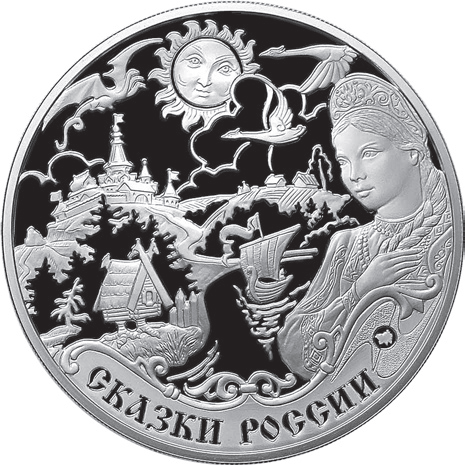
I first fell in love with Russian folk tales, specifically the type called skazki, when I was an undergraduate. I chose to write my BA dissertation on the nature of the Russian Skazka, and I have never lost my love of folklore since then.
I am specifically focussing on the "skazka" in this project, but Russian has many types of folk tales. One of these days I should write up that, but the difference between the types is far too long for this post. The skazka, or "things said", is the type of folktale I focussed on in my dissertation, and which remain my favourite. The word is skazka in singular, and skazki for the plural.
Although some people like to translate the word as "fairy tale", that's inaccurate, since Russian folklore in general lacks "fairies" - those creatures are a tradition of different regions, like Ireland, Scotland, and France. However, they do broadly align with the fairy tale tradition - mostly or completely fictional traditional tales. In England, fairy tales traditionally start with the phrase "Once Upon a Time", and the skazka has a similar cognate phrase used to begin tales "Жили были" - literally "There lived, there was".
My personal favourite tale is the Tale of Ivan Ivanovich, the Firebird, and the Grey Wolf (Сказка об Иване-царевиче, жар-птице и о сером волке). Russian folktales have other fantastic creatures in place of the Western European "fae", in addition to the aforementioned Firebird, there are magicians, like Koshchei the Deathless, named birds like Finist the Falcon. For more generic creatures, that reflect the risks of the Russian landscape, there are the Rusalki, spirits of the drowned who live in bodies of water, the domovoi, polevoi, and leshi - spirits of the home, field, and forest respectively. There are also personifications of things like the Midday Sun.
All across Europe many different folktales were collected in the 18th and 19th Centuries. The pre-eminent collector of Russian tales was a gentleman called Aleksandr Nikolaevich Afanase'ev, and where possible I'll be sticking to variants of the tales that he collected.
One important thing to note about folklore, and folktales in particular: these are from an oral literary tradition. The original tales were never intended to be written down in any country, but were passed on from one person to another over the years. Tales varied with each retelling and with each storyteller, so there is no one canonical version. This goes for tales like Cinderella and Snow White as well. In the study of folklore, a key figure is the Finn Antti Aarne, who wrote the original "Folklore Index" in 1910. This index lists so-called "motifs" which are found internationally in folklore, and which exist across cultures and traditions. In 1928, Aarne's Index was expanded by a US folklorist called Stith Thompson, with the work becoming known as the Aarne-Thompson Index. In 2004 it was updated again by the German Hans-Jörg Uther, expanding the descriptions and numbering, but also removing motifs attributed to a single ethnic group. Russian folktales are a weaving of the many cultures and ethnicities that their polity came into contact with.
The Characters & Their Tales
There are a number of characters I would like to create costumes for, but here are my current plans:
Vasilisa (Василиса)
There are a number of girls in Skazki called Vasilissa, most notably Vasilisa Premudraya - Vasilissa the Wise, and Vasilisa Prekrasnaia - Vasilissa the Beautiful. Her epithets can get mixed up in tellings, and she can also vary from a peasant girl to a princess depending on the tale. The tale I have chosen to focus on is often seen as a "Russian Cinderella" tale, although some of the similarities may be later additions. I'm focussing on the core of the tale.
Vasilissa is a peasant girl, daughter of a travelling merchant and his wife. His wife dies, but before she does she gives her daughter a doll, with instructions to give it food and drink if she was in need. An unspecified amount of time later, her father remarries to a widow with two daughters, both older than Vasilissa. At this point it is the standard cruel stepmother and wicked stepsister motif, but the story deviates again when the father leaves on a journey and his new wife moves the new family to a house beside the forest. There are various shenanigans, which lead to all the candles and fires being out in the house, and Vasilissa being sent into the woods to get a light from Baba Yaga. More on Baba Yaga later, but it's important to note here that she is a chaotic witch character who, like many other witches-in-the-woods, is predisposed to eating children. When Vasilisa arrives, Baba Yaga gives her semi-impossible tasks to perform in return for the fire. With the aid and protection of her doll, Vasilisa manages to complete all her tasks within the time limits and (long story short) is ejected homewards with a burning skull-lantern. It transpires that in her absence no one had been able to sustain a light in the house. even when brought in from another place. When she arrives home, the skull causes the whole house to burn down, with the evil step family included, after which Vasilisa buries the skull according to the instructions to ensure no further harm would come from it. What happens to Vasilisa after that varies from telling to telling, with some having her just living "happily ever after", others leaving her apprenticed to a local cloth-maker, and some extending that to having her skill noticed by the Tsar himself who marries her.
The key elements here, to me are:
- Peasant costume
- The doll
- The skull
Snegurochka (Снегурчка)
Sneh-GUR-och-ka
Snegurochka is an odd character in that she is still evolving. Originally there were two contrasting stories which both had a main character called Snegurochka.
In the first tale, she was created by an elderly infertile couple from snow and ice. She grows up a lovely girl, but when taking part in Spring festivities which included jumping over a bonfire, she turns into smoke and vanishes. This tale speaks to me as one half of an infertile couple, seeking to conceive through "other means".
In the second tale, Snegurochka is the natural daughter of the Spring and Grandfather Frost. She falls for a shepherd, but cannot feel true love because she has a frozen heart. When her mother grants her the ability to love, her heart warms with love for her shepherd but she then instantly melts.
In more recent times, Snegurochka has gained the tradition of being the granddaughter of Grandfather Frost, and is frequently portrayed in art and festivities around the New Year and Christmas celebrations.
Rusalka (Русалка)
The Rusalka (plural Rusalki) is sn Eastern Slavic female watery spirit, who varies between being a fertility symbol and an evil entity depending on the tale and / or the teller. According to renowned folklorist Vladimir Propp, the association of her with evil was a 19th century change. Ignore any descriptions which describe them as "mermaids" - they're not associated with the sea or salt water, and fish tails are not widely featured in their mythos.
The evil rusalka is often portrayed as the spirit of a young woman who had died either in or proximate to a body of water, and who then haunted that location. Some stories suggest (or even state) that the women died by drowning themselves, others that they were murdered by lovers, and yet others that these were accidental deaths. Jilted lovers, abused spouses, and unmarried pregnant girls are among those who have supposedly become rusalki, as well as unbaptised children and girls who died before marriage. In some regions, that could also include women who died in childbirth, between birth and churching, and also those who got abortions. Basically any women who wasn't the perfect Maiden-Mother-Crone, one might say.Their raison d'etre is usually vengeance in one form or another - some are pacified by being avenged, but others seek out young men to lure into the water with them where they will tickle them to death. Yes, tickle...
Visually rusalki are frequently described as "beautiful" (of course), but not always. The further North, the more likely the tradition is to make the Rusalka older and uglier. Where the body is described in detail they are often given big breasts, which are "big-big, so scary"! They usually have either long ed or green hair, however some tales do give them light brown or blonde hair instead. The significant point is that the hair is long and loose, even unkempt. They are almost invariably naked, and sometimes have notably long arms. Where they converge with the Western mermaid mythos is in their attitudes - they have long hair which they like to comb out when out of the water, and they like to sit on rocks or docks with their feet in the water. However they do have feet. Some tales suggest that they use fishbones to make headwear of some type - possibly akin to the unmarried woman's kokoshnik. Although they are usually portrayed as solitary, there are tales where they exist in groups. Almost all descriptions give them a love of music, singing and dancing.
Traditionally, the Rusalka would come out of the water on "Kupala night" to join in the more general festivities. Coincidentally, this is the same festival that causes the death of the first Snegurochka. In early June there was "Rusalnaia Nedelya", or Rusalka Week, when the rusalki would leave their home bodies of water to sit and swing in the branches of birch or willow trees at night. During this week it was considered dangerous to swim in the water. The week would end with a ritual banishment (or burial) of the rusalki.
Her fertility connections came from a belief that she would take care of the fields, forests and waters near to her "home", being something of a genus loci or spirit of a locality. In this way, the rusalka is part of the mythos with other Russian spirits-of-place like the leshi and polevoi. It is notable, however, that the rusalka is not consistently believed to actually inhabit her body of water - some tales give their residences as being the tops of tall trees in the forest. Other tales suggest that rusalki migrate annually from the water to the trees during Rusalka Week. In some regions, it was believed that if your local rusalka was having fun, then there would be a good harvest.
Escaping from a Rusalka was impossible once in the water, but if you met one walking in a forest by accident, you could escape by throwing them a scarf, a sleeve from your dress, or another piece of cloth or clothing. One legend type has it that rusalki steal cloth, clothing, and food from women who fall asleep without praying. According to Zelening, the rusalka would also seek her lovers from amongst the men of these women who fell asleep before praying. If a young man was able to grab a rusalka and put a cross around he neck, then she would "submit" to him and live with him willingly until the next Rusalka Week.
Rusalki are liminal characters, existing between life and death, and there is almost undoubtable a connection between the Rusalka Week of the 19th and 20th centuries, and the earlier Rusalia festival in memory of the dead.
My love of the rusalka myth comes from their duality. On the one hand they are vengeful beasts who lure young men and drown them, on the other they save young children from wild animals and save people from drowning. They want to hurt and cause harm to those who harmed them, and they are also cheerful girls who love to play. At once malicious and sly, and also joyful, humourous, and fun-loving. I like their liminality, but also the fact that you could interpret their state as a refusal to accept a strictly prescribed route in life - they weren't the maiden, the successful mother, or the doting grandmother. Life gave them lemons and they made lemonade - they took the hand they were dealt and rolled with it. I also like that they are all women when in groups, who love to sing, to dance, and to generally play around.
Baba Yaga (Баба Яга)
Ba-ba-ya-GAH
Baba Yaga is the witch archetype in Russian folklore. Sometimes she's a solitary woman, and sometimes she's a trio. She's an ambiguous character, who sometimes helps the protagonist, sometimes hinders, and sometimes neither. She can be an old wise woman who grants important guidance, or a fearful child-eating monster to be escaped, all depending on the tale. Baba is a word signifying woman and/or grandmother across Slavic languages. The second element, "Yaga" is currently seen as cognate to words that can be translated as horror, anger, witch, fury, disease, pain, or worry.
In Vasilisa's tale, above, her status is even more ambiguous. On the one hand she is clearly shown as desiring to eat Vasilisa, yet she also gives the heroine the vital thing she needs - fire/light. Some scholars have interpreted her role here as being a necessary intermediary between dependent childhood and independent adulthood - a repository of wisdom, only to be shared with those who are worth of it, and after they have passed through some right of passage event.
Baba Yaga is a very clearly described person, who is associated with a number of specific objects and traits. Her mode of transport is almost invariably a pestle and mortar, where she rides in the iron mortar, using the pestle as power, and has a broom behind her which sweeps away her trail. She lives in a small hut in the woods, which usually has chicken legs and may even walk around. Occasionally her hut is instead propped up on blini (pancakes). When she approaches, on reciting a rhyme her hut turns to face her and lets her enter. Like Western European witches, her home is surrounded by a fence but instead of being made of sweets, it's made of bones and topped with glowing human or horse skulls. Inside her hut is a stove, on which she sleeps, and she has a big nose - so big that in some tales it reaches the ceiling. Her nose is powerful, and in some tales she can smell the scent of the hero when hidden. One of her legs is bony - in fact one of her epithets is Bone Leg. Her teeth are described as being made of iron. She is always ugly and old, with grey hair and sagging breasts. Yet for all that she is not the beautiful protagonist, or the heroes prize, she remains a valuable person who demands the respect she deserves. Successful heroes and heroines are the ones who treat her, at least eventually, with respect and humility, and who endeavour to complete the tasks she sets them.
Her hut is interpreted as being a type of house-coffin used for the dead in the region in early times. These huts were small, just fitting a body, and were raised up on legs above the ground. The entry point to these huts was traditionally placed facing away from the living villagers. This reinforces the interpretation of the symbolic nature of Baba Yaga as a figure on the boundary between life and death.
Baba Yaga is usually alone, even when part of a trio each sister lives alone. As a mother in some legends, of the sorcerer Koshchei the Deathless, she is never given a mate. She does have magical associates, both human and animal. In Vasilisa's tale, she is associated with three knights - one red, one white, and one black - who symbolise the dawn, midday, and night. In The Geese-Swans, she is supported by the eponymous birds who initially snatch the baby brother, and then who chase the sister and brother as they escape home. However, in neither tale is she seen with the others, merely that they are associated with her.
Firebird (Жар птица)
The Firebird is a magical beast, who can be a blessing or a harbinger of doom depending on her tale. In most tales the bird is precisely that - a magical bird which can be captured or stolen, and which can sometimes talk, but otherwise is just a bird. In her Land of the Firebird, Massie told another version of the Firebird tale whereby the bird was actually a young girl tragically transformed by the evil Koshchei, but I don't have a copy to hand to verify which tale that was from originally.
In many of the stories about the Firebird she is a quest goal for someone - usually the youngest Prince, and in one instance a royal archer. In almost all of these tales, the trigger for the quest is the finding of one of the Firebird's shed feathers, and triggers a covetous desire on the part of the monarch. In both the Firebird and Princess Vasilisa, and Ivan Ivanovich and the Grey Wolf, the quester must also retrieve the beautiful princess, called either Elena or Vasilisa the Beautiful.
The mythos of the Firebird has influenced artists in and around Russia for centuries. In particular, Stravinsky's ballet and traditional folk art.
To Be Continued
Well, this is getting a bit long, so perhaps I'll pause here and continue in another post...

